

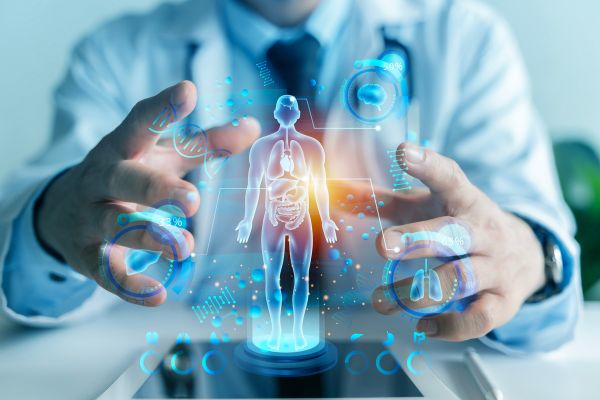
Healthcare has always been shaped by innovation, but the pace of change in recent years feels different—faster, deeper, and more personal. If you look closely at hospitals, clinics, and even home care today, you’ll notice something quietly transforming the way medicine works. That shift is artificial intelligence.
Understanding how AI is changing healthcare isn’t just about futuristic robots or complex algorithms. It’s about small, meaningful improvements—quicker diagnoses, smarter treatments, and systems that learn as they go. The kind of changes that don’t just impress on paper, but genuinely affect how people experience care.
A New Kind of Medical Intelligence
At its core, AI in healthcare is about pattern recognition. Machines are now capable of analyzing massive amounts of medical data—far more than any human could process in a lifetime—and finding connections that might otherwise go unnoticed.
This doesn’t replace doctors. Instead, it gives them a sharper lens.
A radiologist, for example, can review scans with the help of AI tools that highlight potential abnormalities. These tools don’t make decisions on their own, but they act like an extra set of eyes—ones that never get tired, never lose focus, and can compare thousands of cases in seconds.
It’s a subtle partnership, but a powerful one.
Faster and More Accurate Diagnoses
One of the most visible ways AI is reshaping healthcare is through diagnosis. In many cases, time is everything. The earlier a condition is detected, the better the chances of effective treatment.
AI systems are now being used to detect diseases such as cancer, heart conditions, and neurological disorders at earlier stages. They analyze imaging data, lab results, and patient histories to identify warning signs that might be too faint or complex for traditional methods.
There’s something almost reassuring about this—knowing that behind the scenes, there’s a system constantly scanning for clues, reducing the chances of something being missed.
Still, it’s important to remember that these tools don’t operate in isolation. The final call remains in human hands, which keeps the process grounded in clinical judgment.
Personalized Treatment Becomes the Norm
Healthcare has long aimed to treat patients as individuals, but AI is making that goal far more achievable. Instead of relying solely on generalized treatment plans, doctors can now tailor care based on a patient’s unique profile.
AI analyzes genetics, lifestyle data, medical history, and even environmental factors to suggest more precise treatment options. This is especially significant in areas like oncology, where personalized medicine can dramatically influence outcomes.
It’s not just about finding what works—it’s about finding what works best for that specific person.
And in many ways, this marks a shift from reactive care to proactive care. Rather than waiting for symptoms to worsen, AI helps predict risks and guide early intervention.
Transforming Patient Monitoring and Care at Home
Another interesting shift in how AI is changing healthcare is happening outside hospital walls. With wearable devices and smart monitoring systems, patients can now be observed in real time from the comfort of their homes.
AI plays a key role here by analyzing continuous streams of data—heart rate, sleep patterns, oxygen levels—and flagging any unusual changes. For chronic conditions, this kind of monitoring can be life-changing.
It allows for earlier responses to complications, reduces unnecessary hospital visits, and gives patients a greater sense of control over their health.
There’s also a quiet emotional benefit to this. Being able to recover or manage a condition at home, rather than in a clinical setting, often makes the experience feel less overwhelming.
Streamlining Administrative Work
Healthcare isn’t just about diagnosis and treatment. A large part of the system is administrative—appointments, records, billing, documentation. And honestly, this is where things can get frustrating for both patients and professionals.
AI is helping to simplify these processes.
From automating appointment scheduling to organizing electronic health records, AI reduces the time spent on routine tasks. This frees up healthcare professionals to focus more on patient care, which is where their expertise truly matters.
It might not sound as exciting as advanced diagnostics, but improving efficiency behind the scenes has a real impact. Shorter wait times, fewer errors, and smoother interactions all contribute to a better overall experience.
Supporting Medical Research and Drug Development
Medical research has always been a long and complex journey. Developing new treatments can take years, sometimes decades. AI is beginning to shorten that timeline.
By analyzing vast datasets from clinical trials, scientific literature, and patient records, AI can identify potential drug candidates more quickly. It can also simulate how different compounds might behave, reducing the need for early-stage trial and error.
This doesn’t eliminate the need for rigorous testing—far from it—but it helps researchers focus their efforts more effectively.
In a way, AI acts like a guide, pointing scientists toward the most promising paths rather than leaving them to explore every possibility blindly.
Enhancing Decision-Making in Critical Situations
In emergency settings, decisions often need to be made quickly, sometimes with limited information. AI tools are being developed to assist in these high-pressure environments by providing real-time insights.
For example, AI can analyze patient data as it’s being collected and suggest possible diagnoses or treatment options within moments. This kind of support can be invaluable when every second counts.
Of course, these tools are designed to assist, not override. The human element remains essential, especially when dealing with complex or unpredictable situations.
Still, having that additional layer of insight can make a significant difference.
Addressing Challenges and Ethical Considerations
While the benefits are clear, it would be incomplete to talk about how AI is changing healthcare without acknowledging the challenges.
Data privacy is a major concern. Healthcare data is deeply personal, and ensuring its security is critical. AI systems rely on large datasets, which raises questions about how that data is collected, stored, and used.
There’s also the issue of bias. If an AI system is trained on incomplete or unrepresentative data, it can produce skewed results. This is something researchers and developers are actively working to address, but it remains an ongoing conversation.
And then there’s trust. For many people, the idea of machines playing a role in healthcare can feel unfamiliar, even unsettling. Building confidence in these systems takes time, transparency, and consistent results.
The Human Side of a Technological Shift
Perhaps the most interesting aspect of this transformation is how it still revolves around people.
Despite all the technology, healthcare remains deeply human. It’s about empathy, understanding, and connection—things no algorithm can fully replicate.
What AI does is enhance those human qualities by removing some of the barriers. It gives doctors more time to listen, more tools to understand, and more clarity when making decisions.
In that sense, AI isn’t replacing the human side of medicine. It’s making space for it to grow.
Looking Ahead to the Future of Healthcare
As we move further into 2026 and beyond, the role of AI in healthcare will likely continue to expand. New applications will emerge, existing systems will improve, and the line between technology and care will become even more seamless.
We may see more predictive models that anticipate health issues before they arise, more advanced robotics assisting in surgeries, and more integrated systems connecting different aspects of care.
But even as the technology evolves, the goal remains the same: better outcomes, more accessible care, and a system that works more efficiently for everyone involved.
A Reflective Conclusion
Understanding how AI is changing healthcare isn’t about imagining a distant future—it’s about recognizing a transformation that’s already underway.
From earlier diagnoses to personalized treatments and smarter systems, AI is quietly reshaping the experience of care. Not in dramatic, headline-grabbing ways, but in steady, meaningful improvements that add up over time.
There are challenges, of course. Questions about privacy, ethics, and trust will continue to shape the conversation. But alongside those concerns is a sense of possibility.
Because at its best, healthcare is about helping people live healthier, fuller lives. And if AI can support that goal—making care more precise, more responsive, and more human—then its role isn’t just technological. It’s deeply personal.